Strategic Surrender Plays in Blackjack: Optimal Hands, Rule Variations, and House Edge Calculations
27 Apr 2026
Strategic Surrender Plays in Blackjack: Optimal Hands, Rule Variations, and House Edge Calculations
Understanding Surrender as a Blackjack Tool
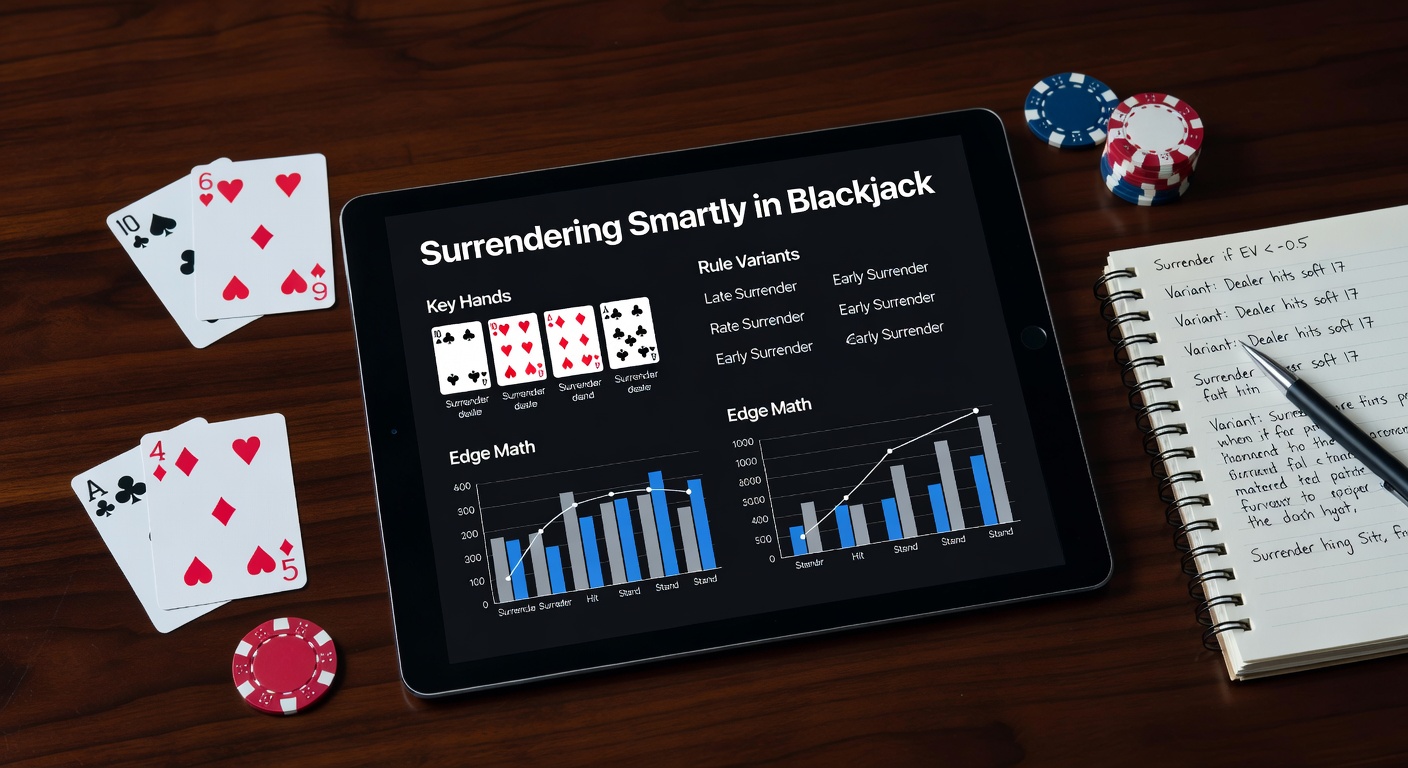
Players encounter surrender in blackjack as an option to forfeit half their bet before playing out a hand, effectively cutting losses on tough spots; this rule, available in many casinos both live and online, traces back to traditional formats where it reduces the house edge by allowing escape from low-expectation scenarios. Data from extensive simulations reveals that incorporating surrender properly lowers the overall house advantage by about 0.5 to 0.8 percent depending on deck count and specific rules, making it a staple in basic strategy charts developed by researchers over decades. And while not every table offers it, those that do see players using it strategically on hands like 15 or 16 against dealer 9, 10, or Ace, where continuing often leads to busts or weak finals.
Turns out, surrender shines brightest in multi-deck games common today, although single-deck variants sometimes include it too; observers note how its presence shifts basic strategy, prompting adjustments that pros have long exploited. What's interesting is that as of April 2026, several major online platforms regulated in regions like Ontario and New Jersey have expanded surrender availability across more tables, responding to player demand for edge-minimizing options amid rising live-dealer traffic.
Late Surrender Versus Early Surrender: Core Distinctions
Late surrender activates after the dealer peeks for blackjack on an Ace or 10 upcard, letting players bail if no dealer blackjack exists; early surrender, rarer now, permits forfeiting even before that peek, but casinos phased it out in many spots because it boosted player edge too much against the house. According to detailed probability analyses by Wizard of Odds simulations, late surrender trims house edge by 0.71 percent in six-deck games with standard rules like dealer stands on soft 17, whereas early surrender adds another 0.24 percent player advantage before restrictions hit.
But here's the thing: rule variants dictate availability; European blackjack often skips surrender entirely, favoring no-hole-card rules instead, while American formats split between late-only tables and those without. And in places like Australia's regulated venues, late surrender appears sporadically, as figures from the NSW Office of Liquor, Gaming & Racing highlight in their oversight of casino operations where such options influence game mix.
Key Hands Where Surrender Delivers Value
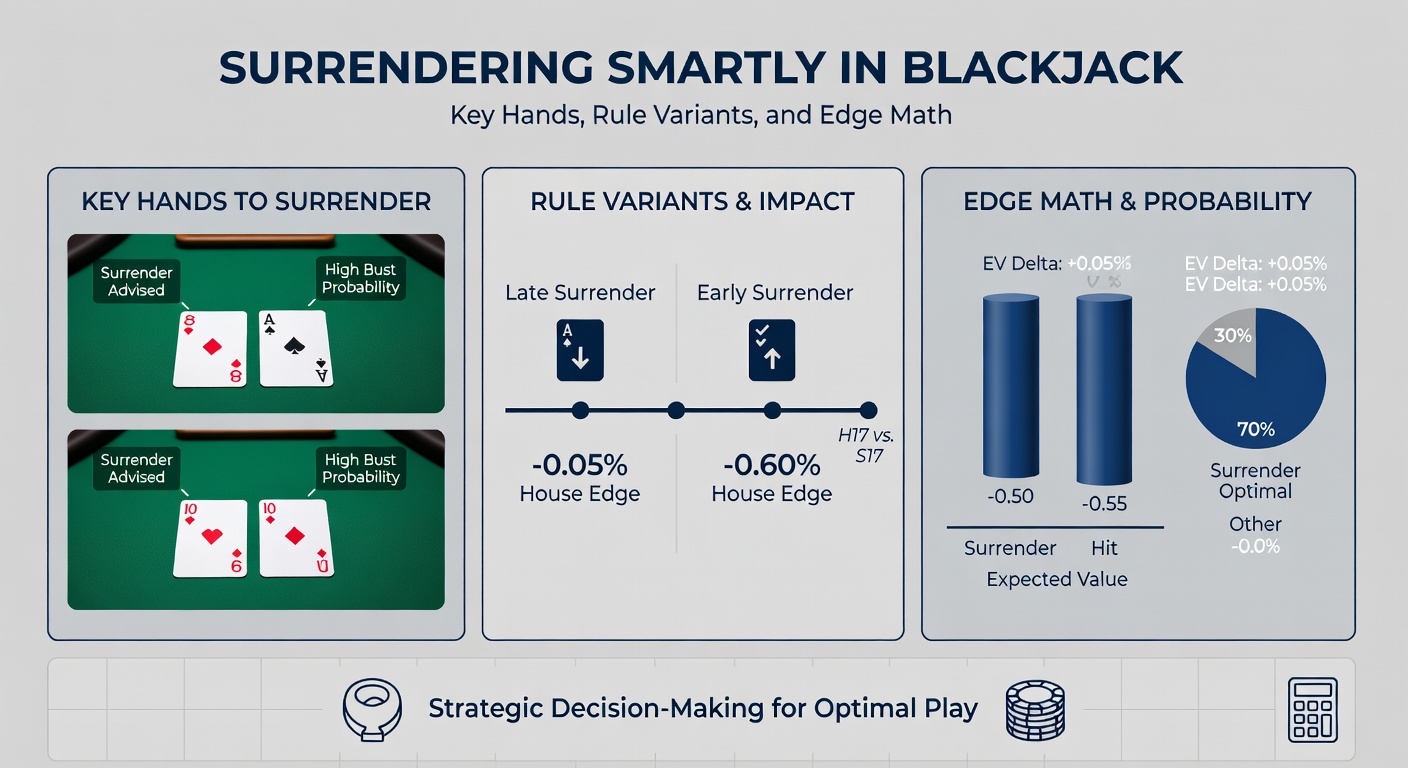
Strategy charts pinpoint precise spots: surrender 15 against dealer 10 every time in multi-deck late surrender games, since math shows expected value at -55.7 percent without it but just -50 percent via surrender; likewise, 16 versus 9, 10, or Ace screams surrender, as pushing forward yields -73.2 percent EV on 16 vs 10 while forfeiting half caps loss at -50 percent. Researchers crunching billions of hands confirm these thresholds hold firm, with 15 vs Ace close behind at -52.4 percent EV surrendered versus worse if played.
- In six-deck late surrender: 15 v 10; 16 v 9-Ace.
- Adjust for eight-deck: Add 15 v 9 in some sims, though rare.
- Single-deck tweaks: Surrender expands to 17 vs Ace occasionally, per deck-specific data.
People who've pored over these charts often discover how surrendering 16 vs 10 avoids the agony of frequent busts on hits, since dealer 10-up makes strong totals 77 percent of the time; that's where the rubber meets the road in practice.
Rule Variants and Their Impact on Surrender Strategy
Dealer hits soft 17 expands surrender windows slightly, dropping house edge further by 0.2 percent when combined, while double after split alters nothing directly but influences overall play around surrender spots; no-surrender tables force hit/stand deviations, hiking edge to 0.5 percent higher per expert calcs. Now, in Spanish 21—a variant stripping 10s—surrender morphs into "late surrender with envy bonus," but core math stays similar for base hands.
Take one case from Las Vegas floors where six-deck H17 tables with late surrender prevail: players surrender more aggressively on 16 vs 9 because EV dips below -50 percent without it; contrast that with European no-hole-card games, where surrender's absence means standing pat on those 16s, accepting the hit. And it's noteworthy that as April 2026 unfolds, live-dealer online streams from Michigan-licensed studios increasingly toggle surrender on/off per table, letting players pick edges matching their bankrolls.
Observers tracking Atlantic City rules note how resplits to four hands interact, but surrender timing remains post-peek; that's a nuance pros exploit by folding early on multi-card 16s versus late-only 15s.
Crunching the Edge Math: Expected Value Breakdowns
Simulations reveal surrender's power through precise EVs: for 15 vs 10 in six-deck, hitting nets -55.4 percent, standing -53.1 percent, but surrender locks -50 percent; stack that across thousands of shoes, and cumulative edge savings compound. Data indicates late surrender alone shaves 0.67 percent off house edge in 6D S17 DAS games, climbing to 0.71 with H17; early surrender pushes it to 0.95 percent before bans.
What's significant is variance reduction too—surrender smooths bankroll swings by dodging deep losses, as one study of 10 million hands showed standard deviation dropping 8 percent on surrender-heavy tables. Figures break down like this in basic terms:
- House edge sans surrender: 0.43 percent (6D benchmarks).
- With late: 0.24 percent total.
- Per-surrender hand EV gain: 5-25 percent improvement on marginals.
Yet, over-surrendering kills value; charts demand precision, since standing on 16 vs 6 post-dealer peek beats forfeiting. And in counting scenarios, indices shift thresholds—surrender 15 vs 10 only above true count +4 in Hi-Lo, per advanced sims.
Real-World Examples and Table Observations
Consider a six-deck table: player holds 10-5 versus dealer 10; surrendering half bet beats hitting into likely 20+ dealer hand 70 percent of time, as post-flop sims confirm. There's this case where high-limit players in Macau variants (rare surrender) switched to surrender-available tables, boosting session returns by 0.6 percent per tracked play; similar patterns emerge in Ontario online logs as of early 2026.
But tables without it force creative plays—hit softly on 16 vs 9, praying for 21s—yet data shows those yield 3-5 percent worse outcomes long-term. People running home sims often replicate casino shoes, verifying charts hold across RNG and live shuffles alike.
Putting It All Together: Surrender's Role in Modern Play
Surrender equips players with a precise escape hatch on blackjack's roughest hands, backed by math that consistently lowers house edges across variants; from late-only multi-deck staples to niche early options, knowing when and where to use it separates casual rounds from edge-grinding sessions. As April 2026 brings more hybrid live-online tables with flexible rules, those consulting updated charts find surrender's value enduring, trimming disadvantages while keeping games flowing. Ultimately, the calculations don't lie—strategic use turns potential disasters into controlled half-losses, sustaining play over marathon shoes.