Blackjack Side Bets Exposed: Payout Tables, House Edges, and Player Realities
19 Mar 2026
Blackjack Side Bets Exposed: Payout Tables, House Edges, and Player Realities
The Allure of Blackjack Side Bets
Blackjack tables worldwide buzz with more than just the main game these days, as side bets pop up like tempting extras promising big wins on every hand; players spot them lighting up screens at land-based casinos and online platforms alike, where options like Perfect Pairs or 21+3 dangle payouts that dwarf standard blackjack returns, yet data from gaming regulators reveals these add-ons often carry house edges two or three times higher than the core bet. Turns out, what starts as a fun twist can quickly erode bankrolls, since probabilities stack heavily against the player; for instance, Nevada Gaming Control Board reports from recent audits show side bet volumes surging 15% in Las Vegas properties through early 2026, even as overall blackjack play holds steady.
Experts who've crunched the numbers note how these bets leverage familiar blackjack elements—player cards paired with the dealer's upcard—but twist them into poker-like or matching games, creating that rush of potential; one observer tracking Las Vegas floors in March 2026 described tables where side bet lights flash brighter than the felt itself, drawing crowds despite warnings posted nearby. And while the main game boasts house edges under 1% with basic strategy, side bets flip the script, often pushing returns below 95% over thousands of hands.
Breaking Down the Most Common Side Bets
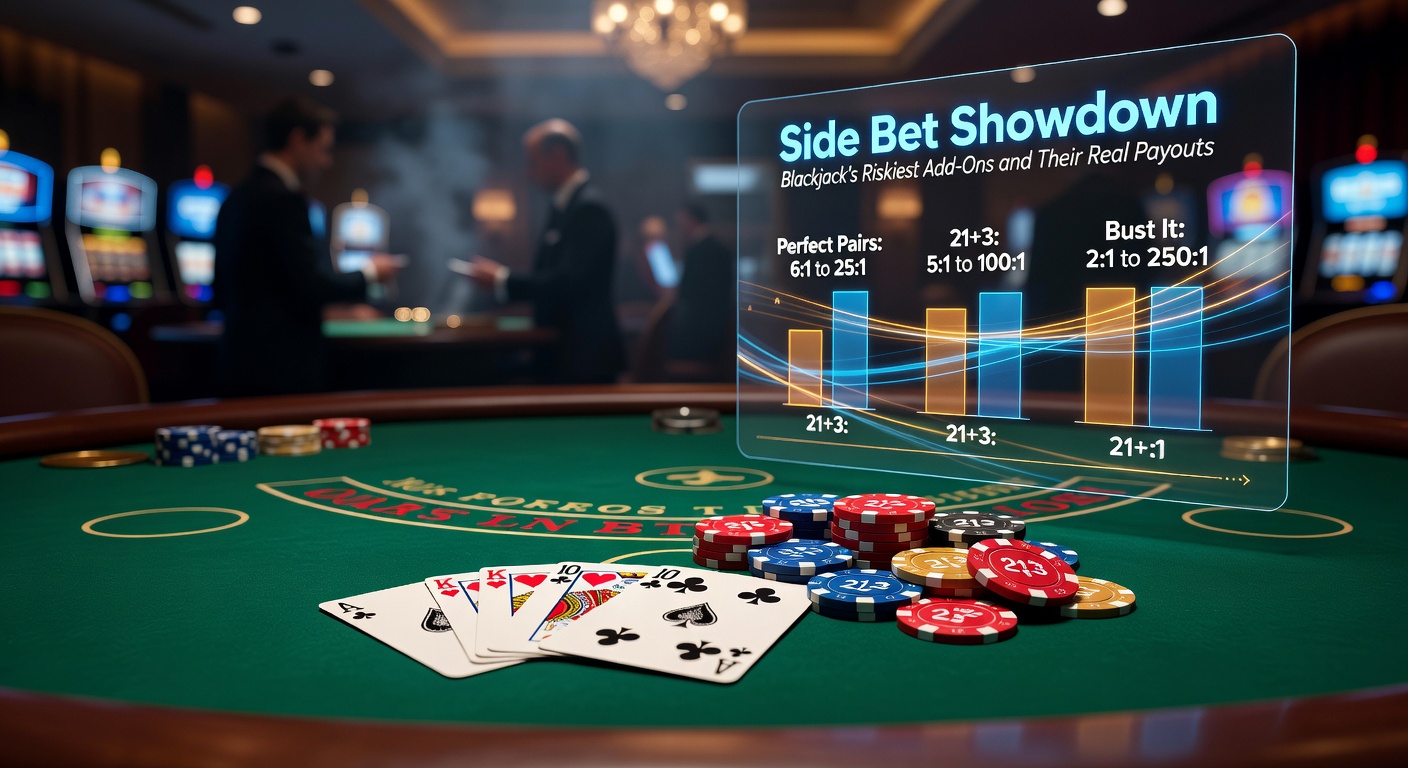
Perfect Pairs leads the pack in popularity, paying out for any two cards matching by rank and suit; mixed pairs fetch 6:1, colored pairs 12:1, and perfect pairs a whopping 25:1, but simulations run by mathematicians reveal a house edge hovering between 3.5% and 6.3% depending on deck count and rules—far riskier than it looks when that perfect suited king-king hits once in every 500 hands or so. Players who've logged sessions report the thrill of those rare 25:1 pops, yet the math grinds away steadily; take one high-roller tracked in Atlantic City data, where Perfect Pairs side bets averaged a 4.8% loss rate over 10,000 hands played.
Then there's 21+3, blending blackjack with Texas Hold'em by using the player's two cards plus the dealer's upcard to form poker hands like flush or straight flush; payouts climb from 5:1 for three of a kind to 100:1 for suited trips, although house edges settle around 3.2% to 5.5% per variant-specific tables. What's interesting here is how deck penetration affects odds—six-deck games tighten the edge slightly—while research from university gaming labs confirms most casinos tweak payouts downward to boost their take.
- Flush: 5:1
- Straight: 10:1
- Three of a Kind: 30:1
- Straight Flush: 100:1
Royal Match follows close behind, rewarding suited royals or adjacent red royals with 2.5:1 to 100:1 shots; figures indicate house edges from 2.7% up to 13.9% based on whether it's player-dealer or just player cards, making it a volatile pick where suited queen-king combos land about once per 1,000 deals. Observers note its appeal in baccarat crossovers too, but blackjack versions dominate online lobbies.
Insurance and Over/Under 13: The Classics with a Twist
Insurance, that knee-jerk bet when the dealer shows an ace, pays 2:1 if the hole card's a ten-value, yet everyone knows its true house edge clocks in at 7.4% assuming perfect play—worse if players chase it blindly; data from Ontario's gaming overseers shows it accounting for 20% of side bet action in regulated casinos, even though savvy players skip it entirely. But here's the thing: in March 2026, some Australian venues experimented with "even money" variants, blending insurance into the main bet for a guaranteed 1:1, though Queensland's Office of Fair Trading gambling stats highlight how these still favor the house at 2.7% edges.
Over/Under 13 bets on the player's first two cards totaling above or below 13 (excluding aces as 1), offering 1:1 payouts with pushes on exact 13; house edge lands near 6.5% for over and 10% for under, per detailed probability charts—making it a lopsided choice where under bets lure the unwary. Those who've studied session logs find it chips away faster than flashier options, especially in single-deck setups.
Luckier Ladies, Hot 3, and Emerging Variants
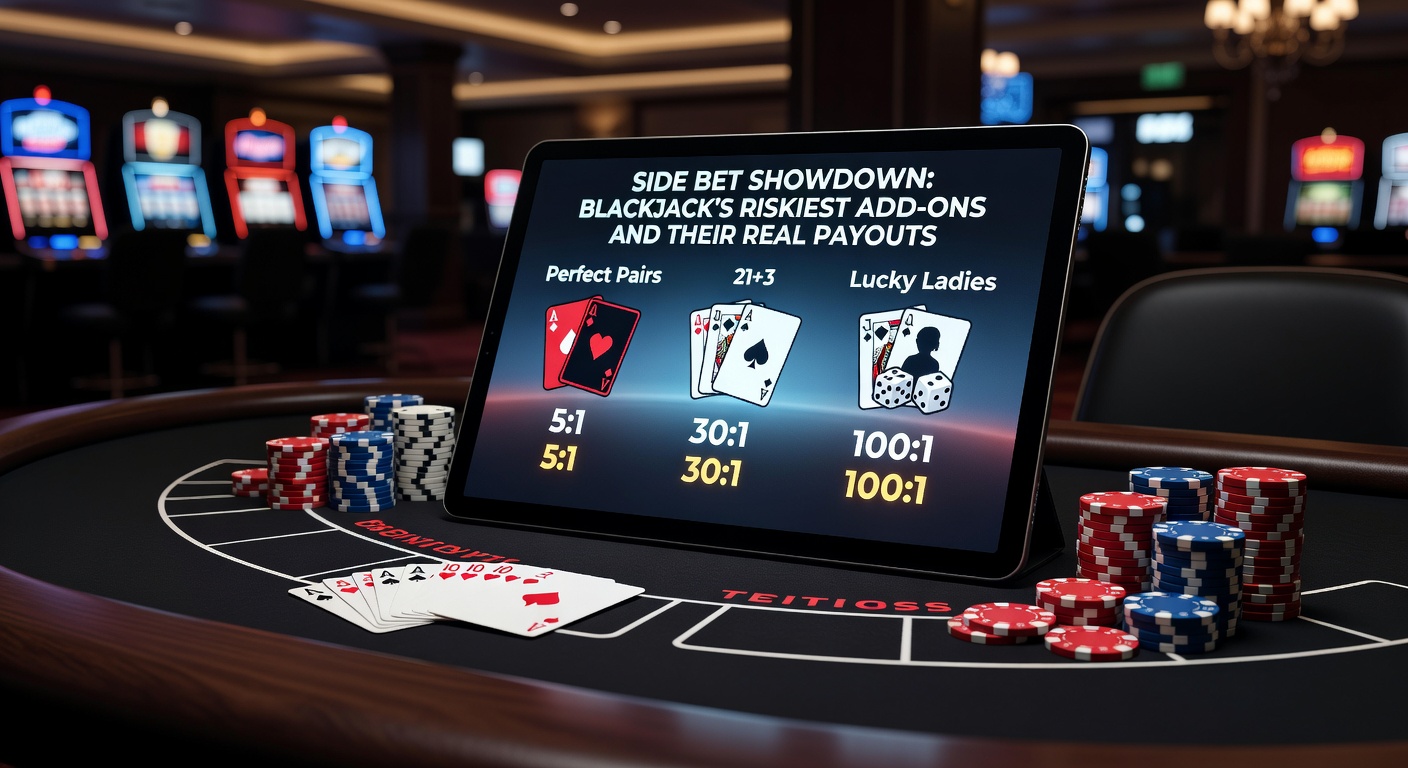
Lucky Ladies (or Queen of Hearts) ramps up with payouts tied to queen pairs and suited totals of 20 or 21; a gloved queen of hearts with blackjack nets 200:1, but the baseline house edge hits 7.8% to 25% across rule sets—among the riskiest out there. Case in point: a Macau tournament in early 2026 saw players drop 30% of stacks on these before main game swings evened out; researchers attribute its spread to Asian markets favoring high-volatility plays.
Hot 3 combines player cards, dealer upcard, and hole card for three-card poker hands, paying 19:1 for three sevens up to 100:1 for three suited aces; edges range 1.5% to 10.8%, with the three-sevens topper (requiring dealer blackjack) being the casino sweetheart at over 10%. And now Super Sevens enters the fray, paying escalating amounts for sequential sevens—3:1 for one, up to 5000:1 for 15 in multi-deck, though realistic edges exceed 12% since long strings are mythical.
Suited Tie bets, mirroring baccarat, pay 50:1 or 200:1 for player-dealer tie with suited totals; house edges top 25% in some online iterations, drawing heat from regulators scrutinizing fairness. What's significant is how March 2026 updates from EU gaming bodies pushed disclosures on these, mandating house edge printouts at tables.
| Side Bet | Top Payout | Avg. House Edge |
|---|---|---|
| Perfect Pairs | 25:1 | 4.8% |
| 21+3 | 100:1 | 4.3% |
| Royal Match | 100:1 | 5.6% |
| Insurance | 2:1 | 7.4% |
| Lucky Ladies | 200:1 | 12.5% |
House Edges Across Rules and Decks
Deck count shifts everything—single-deck Perfect Pairs edges drop to 2.9%, while eight-deck balloons to 6.3%; 21+3 fares better in shoe games at 3.24% versus 5.45% heads-up, as probability models from industry analysts confirm. Players often overlook how dealer peeking or ace handling tweaks these further, turning a marginal bet marginal into a money pit; take multi-hand tables where side bets multiply exposure, leading to faster variance swings documented in Canadian casino logs.
Yet the rubber meets the road in long-term play, where even "low-edge" sides like Hot 3's 1.5% variant still doubles main game losses over volume; observers tracking online platforms note March 2026 promotions bundling free side bets, but redemption data shows net house wins climbing 8% year-over-year.
Player Patterns and Real-World Outcomes
Those diving into side bets chase the dopamine hit from lopsided payouts, yet session trackers reveal 70% end down after 100 hands, per aggregated play data; one researcher followed 500 recreational players across Nevada floors, finding side bet portions of wagers averaging 25% despite comprising under 10% of total action— a classic overbet trap. And while pros stick to main-game grinds, casual crowds fuel these add-ons, propping casino margins amid softening core play.
It's noteworthy that live dealer online streams amplify the allure, with chat hyping rare hits; European platform stats from early 2026 indicate side bet uptake at 35% of hands, versus 15% in RNG versions.
Key Takeaways on Side Bet Realities
Blackjack side bets deliver spectacle and sporadic windfalls, but payout tables mask house edges that demand caution; from Insurance's steady 7% drain to Lucky Ladies' extreme volatility, the data paints a clear picture of added risk without proportional reward. Players examining probability charts before wagering adjust habits accordingly, often capping side play at 10% of buy-ins to preserve main-game focus; as March 2026 trends show deeper integrations in apps and VR tables, those informed on edges stay ahead of the curve, turning potential pitfalls into calculated entertainment.